How Calcium Buildup Damages Salt Cells Over Time
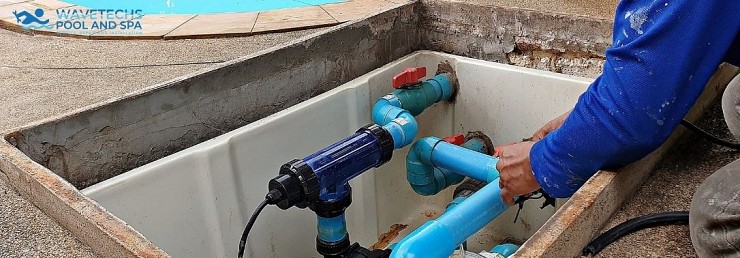
A salt cell works quietly to keep your pool clean and safe. However, calcium accumulation or scaling is a challenge in saltwater pools. The minerals in pool water cling to surfaces, especially in dry climates like North Texas.
How Cold Nights and Fluctuating Temperatures Affect Pool Heaters
Texas weather has a way of keeping us pool owners on our toes. Southlake also has its share of sun-soaked afternoons followed by noticeably cooler mornings. Though these temperature swings seem mild to us, the pool heater notices every shift. Your heater can struggle after a cool night, as these subtle temperature changes and wind affect your pool temperature.
How an Aging Pool Pump Affects Water Clarity and Chemical Balance
The water pump is your pool’s steady companion, humming along to keep the circulation and chemicals balanced. However, an aging pool pump shows warning signs with murky water and slow impellers.
The Most Misdiagnosed Pool Heater Problems
Your pool heater is truly a blessing for year-round swimming comfort. It nullifies weather changes and promises refreshing dips through the seasons. However, one tends to assume the worst when it stops performing as expected. While you may picture major pool heater repair or expensive replacement, your ‘heater failure’ may be a misdiagnosis.
Signs that Your Pool Pump May be Too Damaged to Repair
Your pool pump is always hard at work, forever humming away to circulate water and filter waste. However, pool pump glitches can put a screeching stop to all your swim plans. Though many pool pump problems can be repaired, some signs point to pump damage that’s beyond any fixes.
What Blocked Airflow Means for Your Pool Heater and How Repairs Address It
Nothing throws off a perfect pool day like discovering the water is colder than your morning shower. The disappointment and frustration hit fast when your pool heater refuses to heat. However, before assuming the worst, remember that blocked airflow can silently cause many pool heater problems.
How To Keep Your Pool’s Water Balanced With A Healthy Salt System
Saltwater pools have become the hot favorite across Texas for their smooth and gentle swimming experience. The chlorine scent is lighter, the water’s softer on the skin, and gentler on the eyes. The best part? Salt water pool maintenance in Keller, TX, is far less demanding than the old chlorine bucket approach!
How To Keep Your Pool Heater Running Efficiently Year-Round
The Texas swimming season can stretch long, allowing you to savor a cool dip in August and a warm soak in December! The secret to keeping that water ‘just right’ all year long comes down to one thing—how well you care for your pool heater.
The Role of Proper Water Chemistry in Preventing The Need for Salt System Repairs
Undoubtedly, dipping into a saltwater pool on a Texas afternoon is a toe-curling delight! There’s a reason saltwater systems are gaining ground in Haslet—the water feels softer, no chlorine sting, and easier upkeep. However, you need water chemistry balance and care to keep relishing the delicious afternoon dips.
How Pool Heater Efficiency Drops Without Proper Care
Pool owners have the reliable pool heater to thank for extending their backyard swimming beyond summer. A warm, inviting pool can carry you well into autumn, and sometimes even through winter. However, your pool comfort depends on how well you care for your pool paradise. A neglected pool heater will lose its effectiveness, increase pool operation costs, and eventually need pool heater repair.
The Impact of Water Flow Issues on Pool Heating Systems
A home pool is your personal slice of paradise where stress dissolves in the shimmering pool water. Summer afternoons stretch into relaxing evenings, but with the cooler months calling, your pool paradise will need some heater help. However, free water flow and circulation are a must for pool heating.
How Proper Water Maintenance Can Prevent Salt System Repairs
Saltwater pools are ruling homes, and it’s easy to see why. They bring a gentler, smoother swimming experience than traditional chlorine pools. The saltwater system turns salt into chlorine to deliver clear water minus the sharp smell or harsh chlorine feel.